Sunday, March 26, 2017

Week Nine Reflection

Image result for sears
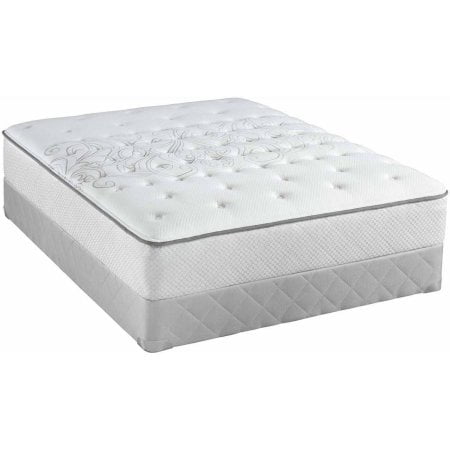
This past week in HONB 200-02, the class primarily focused on the SMARTProjects and the ways in which we can approach marketing and selling the resulting products. On Tuesday, each team met privately with Professor Spotts to thoroughly review and discuss the survey questions for our projects. Upon receiving feedback, our group was able to successfully finalize our questions and we plan on asking them soon to potential businesses that could carry our product. Additionally, we were given advice in terms of places we could go to implement our surveys in the hopes of obtaining the most accurate results. Such places included Sears and other related mattress stores in the general Springfield area that we can easily approach salesmen in. The results of this should help our group be able to specially customize our BedBug product so that it can be a viable option for future potential customers to enjoy.
Image result for mattress
On Thursday, the class was divided up into our respective project teams and each student in the teams took turns picking questions out of a hat to go over as a group and devise answers for. Each question was based off of the textbook's chapter 19, Pricing Concepts. This exercise was important to each of the teams as it allowed us to begin generating ideas on how we plan to market and sell our product. Such ideas involved determining the selling price of our product, the pricing strategy that we will choose to use, as well as various other ways in which we can increase the sales of it, i.e. discounts, rebates, etc. When considering these questions, my BedBug group unanimously decided that it would be wise to implement a bundling process when selling the product. Such a process could include bundling it with other related bed accessories, such as bedsheets, mattress toppers, pillow cases, and other similar bed items.
Image result for discount double check
 There would additionally be both a seasonal discount and rebate system in place to encourage greater sales, especially at times when there may not be as large of an amount of sales as in other times of the year. One question that I found particularly interesting during this class activity was concerning the price sensitivity of our future theoretical product consumers. Considering the fact that our product's target market is predicted to be early risers who struggle to get up in the mornings, such as college students and international businessman traveling between time zones, we decided that our consumer base would be fairly sensitive to price variability. College students would be highly sensitive to the product's price, given their typical lack of monetary funds, whereas businessman would be slightly less sensitive to the price in comparison to college students, yet are still sensitive to it.

Image result for sale
Overall, I found the class session to be very effective in terms of gaining a stronger sense of what our future price for the product will be, and what strategies we will use to promote the product's sales. We are excited to begin officially constructing our product, along with its various other related sales aspects.

Sunday, March 12, 2017

Week Eight Reflection

This past week in HONB200-02 , the primary center of attention was on the class SMARTProjects. On Tuesday, we had a different class setup compared to all of our previous meetings. This involved each SMARTProject group sitting together at separate tables and one by one meeting individually with Professor Spotts to discuss any new updates on the projects in order to receive feedback. Due to Professor Spotts being my group's marketing consultant, we luckily had already had a meeting with him earlier in the week and thus we had a broad idea of what he was going to ask us concerning our project.
Image result for marketing consultant

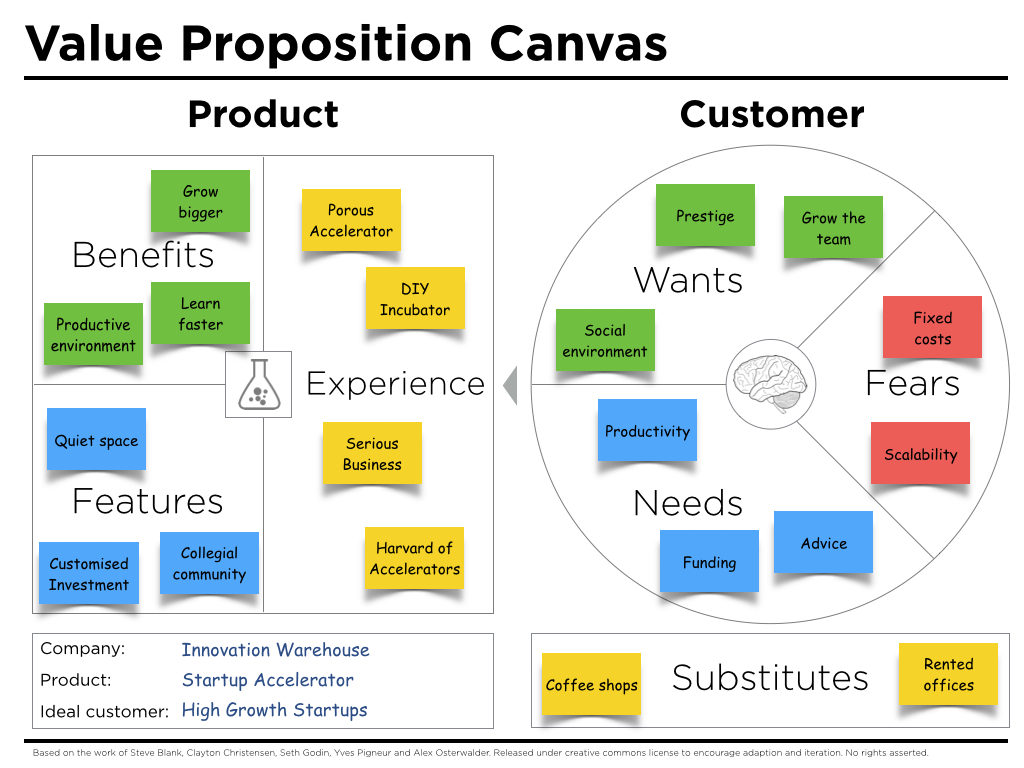
Prior to this class session, my group had created a set of potential survey questions that we would like to ask possible consumers of the BedBug. In this way, we would be able to determine exactly how large or small of a target market the product would have, and thus be able to advertise for it accordingly. Additionally, the creation of this survey would theoretically help to enhance the product so that its consumers would be both willing to purchase it and be fully satisfied with it. We then narrowed down these questions to the most crucial ones and carefully arranged them in a well-thought out order so that the survey would appear to be organized and practical. We also developed a value proposition canvas for the BedBug, which displayed the predicted customer needs, wants, and fears, in relation to the product's benefits, features, and experiences gained from using it. The completion of this has allowed our group to be able to see areas that are in need of improvement, such as the addressing of our customers' fears on the product.     

Image result for survey
Upon officially meeting with Professor Spotts during the allotted class time, our group presented him with the newly created survey. As he had helped us originate a majority of the questions on it in our prior meeting, the class meeting was relatively quick in comparison to many of the other groups'. He gave us a few tips of ways in which we can reorganize the order of the survey, as well as a few related questions we could consider adding to it. With the completion of the meetings, we each received binders containing feedback on our progress thus far in the class, given that this week signaled the middle of the term. Overall, I considered the class to be a success in terms of having time in our groups to work both together as teams and with Professor Spotts to further develop the marketing of our products.  

Image result for diffusion of innovationOn Thursday, the class setup was returned to the typical style, with the class sitting in their respective groups while as a whole discussing new material unrelated to our specific SMARTProjects. This material was specifically centered around the actual buying of products itself, with two main topics being covered. One of these said topics was the Diffusion of Innovation concept, which describes the average consumer's adoption process of a product. This process begins with Innovators and Early Adopters, both of which are the consumers that are deemed to be the most willing to try new products, despite not knowing what the outcome of the products will be. After these consumer types there is a chasm, which serves as an indicator of whether or not a product will be successful. If a product cannot advance past the chasm, then it is a failed product. However, if it does advance past the chasm, then the next consumers in line are the Early Majority and Late Majority, which serve as the middle ground of a product's customers by being mainstream adopters. The final portion of the diffusion of innovation are the laggards, who are known as being the resisters to try new products. In our SMARTProject groups, we then decided who our consumers that would make up each stage in the theory would be.

Image result for product life  cycleThe second topic of discussion was the largely regarded Product Life Cycle. There are four known stages in a product's life cycle, all of which culminate to show a growth curve. At the beginning low point of the curve is the Introduction stage, during which there are slow sales of a product and no profit is being made. Next comes the Growth stage, through which there is a rapid growth of sales and profits are beginning to be generated. This is followed by the Maturity stage, which is the highest point of success on the curve that a product can reach. At this stage, sales are steadily increasing at a slower rate, there is a great deal of competition from other products, as well as a lot of promotion of the said product. However, towards the end of the Maturity era, profits may start to fall, leading into the final stage of the life cycle; Decline. At the point during which a product is experiencing its Decline, sales are greatly falling, product advertising slows before coming to a halt, and the production of the product may be stopped completely. 
Image result for iPhone
The class largely discussed the iPhone as an example product to be referenced when learning about these two topics. While some students believe that it's possible that the iPhone could soon be reaching the decline stage in its life cycle, others believe that the product will remain in the maturity stage for the remainder of its existence. I personally think that the iPhone will officially reach its decline stage at the point in time in which smartphones as a whole will cease to exist, if that time ever comes. My reasoning behind this mentality is that due to Apple having built up such a well-regarded legacy, especially concerning their iPhone products, consumers will continue to purchase their products knowing that it's a brand used by the majority of people in this day and age, and one which they can rely on for the most part. 
Image result for what do you think


Sunday, March 5, 2017

Week Seven Reflection

This past Tuesday in HONB 200-02, the class was introduced to the Gato Cafe, a concept idea that incorporates the standardized cafe setting with a new feline twist. The Gato Cafe idea, which made its televised appearance while being pitched on Shark Tank, was devised to be a sit-down cafe where people would be able to play with free-roaming cats while enjoying coffee and/or related baked goods. The cafe would theoretically be paired up with a local cat adoption agency, so that the cats being played with would also have the opportunity to potentially be adopted if a person chose to. The concept of Gato Cafe as its own brand, while being only a concept of proof while it was pitched on Shark Tank, is already a reality sprouting up in places across the world. The main ideas behind the combination of cats and coffee is to provide people who enjoy the presence of cats with a sense of therapeutic relaxation and stress relief, which can come from playing with and petting the furry pets. 

Image result for coffee with cats Upon watching this episode, the class was given the challenge of further breaking down and analyzing the concept using the Value Proposition Canvas. This canvas provides its user(s) with an outline of how the product itself can be fulfilling to the customers' wants, needs, and even potential fears. While the left side of the canvas focuses primarily on the product using a square shaped diagram that divides up the benefits, features, and experiences associated with the product, the right side displays a circular diagram in which the customers' wants, needs, and fears are broken down into separate sections. The combination of these two diagrams on one piece of paper is designed to allow the user the chance to make the connections between the two in order to determine whether or not the product does indeed meet the said needs. 

Image result for value proposition canvasBenefits of the product would include the psychological relieving of stress and other therapeutic factors that the petting of cats can provide, having the ability to adopt one or more cats if one so chose to, as well as having the ability to simply go to the cafe and play with the cats without taking on the responsibilities that full ownership of such a pet would entail. Features of the cafe would include the cost that must to paid to simply enter, the food and beverages sold, and of course the cats that roam the cafe. Experiences created at the cafe can range from a variety of options, such as spending time with cats as well as friends and family, being able to search for a cat to adopt, or even just having a place to go to relieve stress incurred by one's daily lifestyle. 

After identifying these aspects from the consumer perspective, the students then aligned these said product factors with the consumer's wants, needs, and fears to determine that the cafe is proving to be satisfying to its customers, as the business itself would realistically do. Furthering this thought process, the students used the value pyramid concept that was introduced earlier in the semester to decipher between all of the possible values and determine which ones specifically the cafe would appeal to. The class was virtually unanimous in the agreement that the cafe would serve to reduce anxiety, provide therapeutic value, be a fun choice of entertainment, and would have a sensory appeal to its consumers, among other value options. 

Image result for coffee with catsOn Thursday, the class resumed the Gato Cafe discussion, primarily focusing on the marketing concept of positioning bases, which concern the potential consumer's point of view on the brand and its product line(s). In groups, the class decided which bases we deemed to be especially relevant in terms of the Gato Cafe's typical customer perspective. My group determined that the brand would appeal to its consumer's emotions, and thus positioning it based off of emotion would be essential. Yet we concluded that positioning the brand based on its attributes might be more effective in the eyes of a consumer, as the concept behind the cafe is so unique. We then discussed the business terms concerning brand loyalty, as companies specifically design concept ideas/products in the hopes of gaining customers for substantial periods of time. 

With the newly gained knowledge of how to effectively create and use a Value Proposition Canvas, I'm excited to take on the task of creating the canvas with the BedBug concept in mind. This should allow my group to successfully determine whether or not our potential consumers' needs and wants are fully being met by the product, as well as what exactly the unique benefits of our product are. Upon learning this, our SmartProject group should have the ability to alter the product to fit our consumer needs and specifically market the product so that it's particularly appealing to our target market. 
Image result for target market


Sunday, February 26, 2017

Week Six Reflection

This past Tuesday in HONB 200-02, the class once again reviewed and discussed the importance of market segments in the eyes of a business looking to target certain potential consumers of their product(s). This discussion heavily tied into the assignment at hand that had been given the prior week. Near the end of the previous class, we were randomly divided into teams of three and were given a take-home, group assignment consisting of three parts that altogether incorporated the class topics explained earlier. The first part of the said assignment involved the individuals viewing a Shark Tank episode in which the product in question, known as PhoneSoap, caused a bit of a debate among the sharks.
Image result for phonesoap shark tank update

The debate was primarily centered around the question of whether PhoneSoap is essentially a business to business (B2B) product, or a business to consumer (B2C) product. While other sharks decided that the technology was not worth their time as they deemed it to be more of a niche product, meaning that it would appeal to only a specifically small market of consumers, Mark Cuban and Lori Greiner embarked in a minor battle over the product and whom its targeted market would consist of. Whereas Mark saw the product as becoming the next big thing in the medical world, specifically in doctor's offices and other related health service businesses, Lori saw the phone cleansing device as being very popular amongst the everyday, middle-class consumer. 
Image result for b2b vs b2c product

These two radically opposing views represent the ideas behind how valuable a product may be deemed to be, and thus how and where the said product should then be distributed, or sold. This ties into the two main business models: volume and margin. Whereas a volume business operates due to mass amounts of people willing to buy products without spending significant amounts of money, a margin business is effective due to smaller amounts of people who are willing to pay more for the products.
Image result for surveyThe second part of the PhoneSoap assignment was reviewed in class on Thursday. In our groups, we were given the task of taking the product information and creating a ten question survey that would enable the company to pinpoint exactly how large of a market this product would have in terms of demand, as well as what segments of people it would attract. A few of the groups' surveys were shared aloud with the class to provide some feedback to the rest of the class members in terms of what types of questions should have been included in the surveys, as well as how consumer surveys similar to this are typically formatted. 

Image result for surveyThe distinction between observational studies and focus group research methods was also thoroughly discussed, allowing the class to then have a solid understanding of what research techniques work best for what product/company situations, i.e. whether the product has been newly introduced to a specific market, what types of consumer markets the company already attracts (if any), etc. 
Upon learning of all the ways in which companies can conduct market research studies, I anticipate that my SMART project group will be able to both effectively find the target market for our Bed Bug product and to then advertise for it accordingly based on exactly what type of consumers the said target market encompasses. Our group has made a substantial amount of progress recently, aside from the business standpoint of the product, and we plan on meeting again within the next couple of days to create another memo documenting our ideas and work thus far in the project's development. 

Sunday, February 19, 2017

Week Five Reflection

This past week in HONB 200-02, a large portion of marketing material that was extensively covered in class was in relation to the widely regarded concept of specialization and market segments. Upon the class's completion of our print advertisement assignment based on designated market segments in today's society, each student took turns speaking in front of the class to explain their unique advertisement. They additionally spoke about the specific market segment that they were required to research, including a brief explanation of basic information concerning their segment, such as its typical age range, family size, financial income, etc. The majority of these said aspects that help to describe the market segments fall under the demographic segmentation category. This essentially refers to traits such as, and similar to, age, gender, income, ethnicity, and family life cycle.

Image result for different types of people After conveying these details of their segment, each student then discussed how they chose to go about creating their print advertisement for the Bambooee product, given the knowledge that they were attempting to appeal to their specific market segment in order to have a better chance at convincing them to buy the product. Upon listening to each student's presentation on their print advertisement, mine included, one cannot help but note the heavy levels of stereotyping that are necessary for marketers to decide how to best market their product(s). With the implementation of such strong stereotyping, marketers have over time developed categories known as segmentation bases, which divide up markets based off of certain characteristics (that are often stereotyped). These said bases include:
Image result for market segments
  • Geographic segmentation
  • Demographic segmentation (as used in the above example)
  • Psychographic segmentation
  • Benefit segmentation
  • Usage-Rate segmentation
With the usage of all of these various segmentation tactics, marketers are able to distinguish their potential consumers based on a multitude of differing traits that can be narrowed down to determine their final target market, which is a group of people or organizations for which an organization designs, implements, and maintains a marketing mix that will satisfy their consumer needs.

Image result for phone soapThe class was then assigned a small group project based off of the newly gained knowledge concerning market segmentation, in which the students have to watch an episode of Shark Tank. In this particular episode, the product being pitched is known as Phone Soap. The purpose of Phone Soap is to clean phones better and more efficiently than any other current cleaning product on today's market. Upon watching this episode, the students were instructed to create a survey in order to determine how great of a need there is for the product in the group's target market. This should be an easier task to complete now that we are fully aware of the many ways in which consumer markets can be segmented and differentiated between.
Image result for alarm clock
On Thursday, our marketing class was joined by the honors engineers for another of our joint classes to discuss the progress being made by each of the SMART groups on their Bug projects. My project group, Team BedBug, has been making substantial progress and is planning on meeting again within the next few days to discuss our next move in creating the product.

Sunday, February 12, 2017

Week Four Reflection

This past week in HONB 200-02, the class only met once due to inclement weather conditions, however in that one class time we discussed the importance of segmenting and targeting markets for business marketing decisions. The class watched an episode of Shark Tank in which the product being pitched to the sharks, called Bambooee, is a reusable, eco-friendly towel that was created to replace paper towels.
Image result for bambooee

We as the students were then given an assignment to create a print advertisement for this product based off of a random target market that was selected out of a hat. We each researched our selected target markets on a website called Claritas, and from this we were able to learn the age group and ethnicity that typically falls under the said market, as well as the market's demographics and lifestyle/media traits. The market that I selected was White Picket Fences. This market typically involves a younger family mix, which refers to those in upper-middle class that are married with children. Regardless of  whether the said families are just beginning to settle down and raise children or are approaching the stage in which their children are fully moved out of the house, this market segment encompasses them all. Those that are defined as being a part of the White Picket Fences category are more likely to enjoy reading, watching sports, and working on various craft projects. 
Image result for white picket fences market segment

In order to address this specific target market in my Bambooee print advertisement, I made sure to emphasize the "going green" aspect of the product, especially reiterating the fact that for every roll of Bambooee purchased, a tree is planted. I purposely did this due to the fact that this segment involves an upper-middle class lifestyle in terms of financial income. Because of this, I believe that there would be a higher chance that those considered to be a part of this segment would willingly pay the higher price for a paper towel that is better for the planet, as opposed to regular towels that are immediately thrown away. This differs from less fortunate financial situations, whereas a family that is struggling to make ends meet would be more likely to not care what type of paper towel they buy as long as it's the cheapest option. When there is even a little extra income to go around in a household then this can make all the difference in terms of the products they choose to buy.
Image result for go green

Furthermore, I made an effort to emphasize the fact that the Bambooee product is perfect for cleaning up all types of messes and spills, especially those made by children, pets, and crafts/projects. Considering the market segment that I was focusing on, I envisioned many upper-middle class households as having children and/or pets that often create messes and spills, as well as being involved in crafts and other at-home projects that need to be cleaned up upon completion. 

Upon learning the ways in which various target markets can be segmented, and the categories that they can fall under based on certain characteristics, I have gained a better sense of knowledge in terms of going ahead with the marketing plans for my team's SMART project, the Bed Bug. I plan on further researching the assortment of market segments that customers for our product could be a part of, and from then on, focusing on developing ways in which we as a group can reach out to these said groups through advertisements and media. In this past week, our group has created three different concept solutions, along with three different logos, that we will work together to refine and finalize. Once these are finalized, we will decide which one (or which combination of aspects from multiple concepts) will be our official solution.  
Image result for bug cartoon


Saturday, February 4, 2017

Week Three Reflection

Image result for kleenex boxThis week in HONBUS 200-02, the class was instructed to thoroughly read chapter 6 of the text, through which the concepts surrounding consumer decision making were discussed. One said crucial concept refers to the types of "consumer buying decisions and consumer involvement." There are generally only a select few categories that consumers' buying decisions fall into, based off of the level of involvement involved in the purchase at hand.

A main category relating to this process is the routine response behavior, in which the goods and services that fall under this title are typically inexpensive and are commonly purchased. Due to this, consumers tend to not spend much time or energy on researching the product prior to making the purchase. A product that I buy which falls under this category is tissues. As I typically have to buy more tissues for my room every few weeks while at school, I usually buy tissues made by the brand Kleenex because of their lower prices. I find the tissues to be a satisfying purchase, and therefore have never really felt the need to purchase tissues made by another brand, despite my knowledge of other tissue brands that exist.

Image result for dove soapAnother consumer purchasing category that has low levels of consumer involvement is the limited decision making category. Purchases that fall under this label often occur when the brand that a consumer is comfortable with spending money on is unavailable, and thus they are forced to buy another brand of the product without spending much time or effort considering the other available product options. A product that I purchase with limited decision making soap. Although I generally almost always buy Dove soap, if the store is out of Dove soap or if it's too expensive at that given time then I'll buy another brand of soap upon quickly examining the price and predicted quality. However, as I don't consider soap to be all that different regardless of which brand produces it, I won't spend much time or energy searching for another brand if Dove soap is unavailable.

Image result for sebastian drenchOn the other end of the involvement spectrum, being brand loyal refers to consumers who choose to repeatedly purchase the same brand of a product due to how highly satisfied they are with the product's results. A brand that I'm extremely loyal to is Sebastian Drench shampoo and conditioner, due to its specification towards consumers with very curly hair. Although this product is indeed more expensive than other brands with similar products, I choose to willingly spend money on it in order to obtain (what I believe to be) the high end results. This displays a fairly high level of involvement in the purchase, as I did adequate research and experimentation with the product prior to becoming loyal to the specific brand that produces it.

Image result for cheap carFinally, the category that many deem to consist of the highest level of consumer involvement is the extensive decision making method. In this category, the consumers often perform extensive levels of research and questioning prior to purchasing the, most likely highly expensive, good or service. I'm currently using this decision making method to find a car to purchase in time for the upcoming summer. As this is a huge investment, especially for a student my age, I want to ensure that I spend my money on a quality vehicle that will provide me with safe transportation. This involves researching brands, dealers, prices, styles and sizes, etc.

Image result for alarm clock person sleepingAdditionally in this week, my SMART Project team designed an official logo for our product, the Bed Bug, and devised a "Point of View" statement that emphasizes what it is that we hope to accomplish with the design of our product, as well as who we plan to specifically market it to. We created both our first team memo and agenda at our last meeting, and we are planning on meeting again within the next few upcoming days to begin coming up with ideas concerning the actual physical production of the Bed Bug. Upon learning of the ways in which buyers make their purchase decisions, I'm excited to begin thinking from the marketers' perspective on this project in terms of devising ways that the product can be advertised in order to appeal to our target market(s).